CALL US: 864-506-5546


BUILDING TRUST BLOG

This series outlines the main choices you'll make in a cabinet design meeting.
Cabinetry is one of the most involved aspects of the design process. Whether you're remodeling a kitchen, bathroom, office, library, laundry room, mudroom, or bar area, the possibilities are endless...and can often be overwhelming! Solution: our Cabinet Academy! Special thanks to Trusted Tradesmen & Co. for their collaboration on this series!
Decision #1: Cabinet Style

Cabinet style describes the relationship of the doors and drawer fronts to the face frame.
Full Access ($) - (AKA Frameless) - the doors and drawer fronts cover the entire cabinet face with narrow gaps between each; the face frame is not visible. The aesthetic can be traditional, contemporary, or modern, depending on the door style.
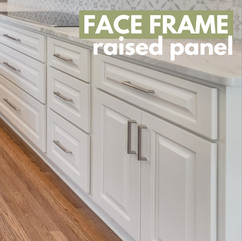
Face Frame ($$) - (AKA Overlay) - there are larger gaps between each set of doors and drawer fronts where the face frame is visible; the doors and drawer fronts rest on top of the face frame; the face frame is not flush with the doors and drawer fronts.
Inset ($$$) - there are larger gaps between each set of doors and drawer fronts where the face frame is visible; the doors and drawer fronts close inside the face frame; the face frame is flush with the doors and drawer fronts.




Decision #2: Door Design


A cabinet door is comprised of rails at top and bottom, stiles on left and right, and a panel in the center. During door design, you'll choose a material and style.
Material Options:
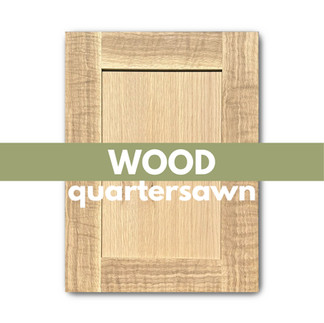
Wood Pros: Can be finished with lacquer or stain; less susceptible to water damage if the finish is dented; available in a variety of species and grain patterns: plain-sawn, quartersawn, and rift-sawn
Wood Cons: Expands and contracts, especially in humid regions, which causes micro-cracks in the finish
MDF Pros: Versatile; often used for custom designs & finished with lacquer; does not expand or contract
MDF Cons: More susceptible to water damage if the finish is dented
Style Options:
Flat panel - for the contemporary aesthetic - Shaker cabinets fall into this category. The term "shaker" generally indicates a rail/stile width of 2.25". Microshaker cabinets have a rail/stile width of 3/4" - 1.5". The main distinction of shaker cabinets is the square profile of the inner edge, where the rails/stiles meet the panel. A traditional flat panel door has a curved or beveled profile at the inner edge.
Raised panel - for the traditional aesthetic - The rails/stiles are often mitred at each corner; you'll choose a profile for the rails/stiles and the raised panel
Slab - for the modern aesthetic - slab doors are comprised of a panel without rails or stiles.




Decision #3: Wood Species

Pine ($) provides a rustic feel; less durable and will dent
Alder ($) subtle grain; pink undertone
Sapele ($$) straight grain pattern; cabernet color; modern replacement for mahogany
Hickory ($$) highly figured grain pattern; takes stain well; doesn't dent easily
White Oak ($$$) most prominent grain pattern and texture; doesn't dent easily; most popular species
Walnut ($$$$) medium figured grain pattern; dark brown color
The wood samples shown below are finished with clear lacquer, but the color of any species can be altered with stain, as shown in the alder, hickory, and white oak kitchen photos at the end of this section.
We recommend lacquer over paint because it is waterproof, scratch-resistant, fast-drying, non-yellowing, and breathable. It comes in a variety of sheens, including matte, satin, semi-gloss, or high gloss. High gloss lacquer is often used for contemporary designs. Matte lacquer is more difficult to clean but best at camouflaging imperfections.


Decision #4: Glass & Mesh

In addition to the flat panel, raised panel, and slab door styles, glass and wire mesh can be combined with wood or MDF to create a custom aesthetic.
Glass with Traditional Frame - Available in many different varieties including clear, acid etched, fluted, flemish, and more!
Glass with Mullion - Divided into sections by wood or MDF partitions.
Glass with Custom Trim - Often made of MDF due to the wide range of design options.
Mesh - Available as a flat or round wire in many different patterns and widths. Nickel and brass are common colorways.


Types of Glass:

Decision #5: Shelving

After cabinet style and door style have been established, you'll choose storage options, including shelving.
Wood vs. Glass - Wood shelves can have a standard or live edge.
Exposed vs. Hidden - Do you want to conceal your shelves behind a door?
Fixed vs. Adjustable - Do you want the flexibility to adjust the spacing between shelves?
Pull-out Trays - Common in kitchen islands and pantry units.
Appliance Garage - Hides countertop appliances behind a door that opens vertically.


Decision #6: Inserts

In addition to shelving, you'll choose additional storage options, including inserts.
Appliance Lift - Keeps your countertops clear; great for mixers or blenders
Rotating Shelf - Can't read the label? Easy reach for canned goods
Utensil/Knife - Knife storage with plastic bristles; slot for cutting board; utensil bin
Cookie Sheet - Multi-rack storage
Trash Pull-Out - A cubby for trash + recycling or trash bin + trash bags


Decision #7: Drawers

In addition to inserts, you'll choose drawer storage options:
Knife Block - custom fit to drawer dimensions
Utensil / Silverware - single or double layer
Charging - built-in outlet for electronics
Spice - single or double layer
Cutting Board - dividers are adjustable
Dish - pegs secure plates and bowls
Appliance Panel - appliances, like this mini fridge, can be camouflaged with a drawer front


You'll also choose hardware for drawers and cabinet doors:
No Hardware/Push to open
No Hardware/Notches
Pulls
Knobs
Pull or Knob with Backplate


Decision #8: Adjustable Pantry

The drawers in this pantry unit are adjustable so you can customize the space between each drawer for your needs.
Decision #9: Base/Feet

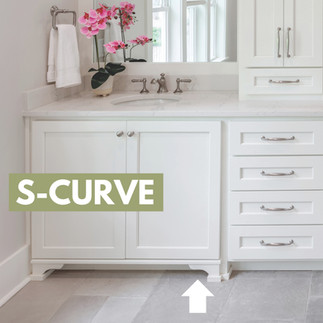
In addition to drawers, you'll choose the base/feet design. The base of your cabinets can be simple or customized to mimic a piece of furniture.
Straight
Curved
S-Curve
Custom
No Feet




Decision #10: Island

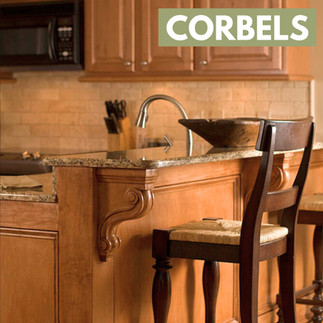
Aesthetically, you can choose between several options for the ends of your island.
Corbels and posts can achieve a traditional aesthetic.
An overhang or panels may be used in transitional or contemporary designs.
Waterfall edges can be seen in transitional, contemporary, or modern designs.
Or, your island can be a combination of several of the options above!



Decision #11: Vent Hood

Aesthetically, you can choose between several options for your vent hood.
Straight
Curved
Angled
Cut Corner
Custom


Decision #12: Lighting

Lighting options for your kitchen can be both functional and beautiful.
In-cabinet lighting - displays heirloom pieces via an overhead fixture or strip of light near the front of the cabinet frame.
Under cabinet lighting - illuminates your countertop workspace.
Under counter lighting - provides visibility to storage spaces under your island.


